Ground Fault Circuit Breakers About
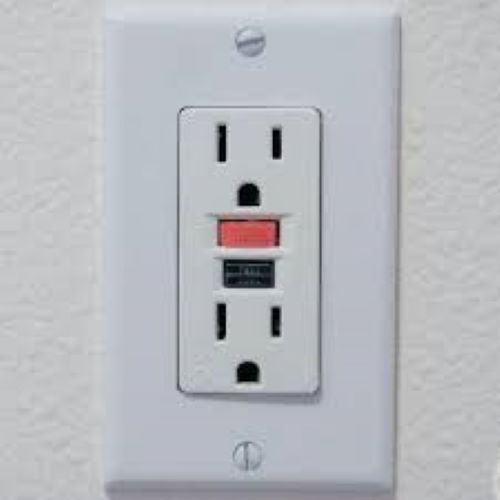
In areas where water can be present, including kitchen, bathrooms, outdoors, and garage, there is an electrical outlet with extra layer of protection installed known as GFCI or Ground Fault Circuit Interrupter.Enhanced Personnel ProtectionWith a tripping current sensitivity of 30 mA, these circuit breakers prioritize human safety by instantly disconnecting power in the event of a ground fault. Their quick response time of less than 40 milliseconds significantly reduces the risk of electric shock, making them essential for homes, offices, and industrial environments.
Versatile Installation and CompatibilityAvailable in single to four-pole models and suited to both 230V and 415V AC applications, these breakers can be installed on DIN rails or flush-mounted panels. Screw-tightened copper terminals ensure secure connections, while the standard modular dimensions make them compatible with most electrical distribution boards.
Certified, Durable, and Easy to OperateConstructed from flame-retardant thermoplastic with an insulated plastic housing, these circuit breakers are ISI marked, CE certified, and meet global safety standards. The manual reset toggle switch and integrated test button facilitate regular safety checks and operational control, ensuring reliable ground fault protection every day.
FAQ's of Ground Fault Circuit Breakers:
Q: How does a ground fault circuit breaker provide personnel protection?
A: A ground fault circuit breaker with 30 mA sensitivity instantly detects earth leakage currents and disconnects power within 40 ms. This rapid response limits the duration and severity of electric shock, making it suitable for protecting people in residential, commercial, and industrial environments.
Q: What is the installation process for these ground fault circuit breakers?
A: These breakers are designed for easy panel or DIN rail mounting. Each device features screw-tightened copper terminals for secure wiring, fitting standard modular sizes. Installation should be performed by a qualified electrician following IS/IEC 61008/61009 guidelines to ensure optimal protection and compliance.
Q: When should I use a single, double, three, or four-pole ground fault circuit breaker?
A: Single pole breakers are used for single-phase circuits, double pole for single-phase with neutral, and three or four-pole models are best suited for three-phase systems. The selection depends on your electrical distribution configuration and desired coverage area within the installation.
Q: Where can these circuit breakers be used effectively?
A: They are ideal for point-of-install ground fault protection in homes, commercial spaces, and industrial settings across India. Their standard compliance, robust build, and wide current range (16A to 63A) make them suitable for diverse electrical circuits and distribution boards.
Q: What is the benefit of the integrated test button on these circuit breakers?
A: The integrated T-Test button allows users to verify the ground fault circuit breaker's operation periodically. Pressing the test button simulates a ground fault, ensuring the breaker trips correctly, and maintaining a consistently safe electrical environment.
Q: How do these breakers contribute to operational safety and reliability?
A: Constructed with flame retardant thermoplastic and insulated plastic housing, these breakers are resistant to fire and current leakage. Their certification (ISI, CE), rapid trip mechanism, and manual reset ensure both dependable protection against faults and longevity in demanding environments.
Q: What are the compliance and certification standards for these breakers?
A: Designed in accordance with IS/IEC 61008/61009 standards, these breakers are ISI marked and CE certified, verifying their quality, performance, and adherence to industry safety regulations relevant to the Indian market.








 Get Latest Price


 Send Inquiry
 Send Inquiry
 Send SMS
 Call Me Free


 English
 Spanish
 French
 German
 Italian
 Chinese (Simplified)
 Japanese
 Korean
 Arabic
 Portuguese